Clarity in a Complicated Regulatory World
Trusted beverage law insights for restaurants, bars, retailers, and hospitality businesses across South Carolina.
Receiving notice that your alcohol license is under investigation can be overwhelming. For many business owners, the first reaction is confusion: What happened? How serious is this? Can we keep operating? What do we do next? If your alcohol license is suspended , under review, or facing enforcement action, it is important to understand one thing immediately: Do not assume the issue is minor. In South Carolina, alcohol licensing problems can quickly affect revenue, operations, staffing, investor confidence, and long-term business stability. The earlier you understand the situation and respond strategically, the more options you usually have. What Triggers an Alcohol License Investigation? A regulatory investigation can begin for many reasons. Common triggers include: Customer complaints Employee misconduct Serving outside approved hours Sales to underage individuals Over-service or intoxication-related incidents Documentation or renewal problems Ownership changes that were not disclosed Repeated compliance violations Sometimes the issue is obvious. Other times, business owners are shocked to learn they were under scrutiny because they had no idea a small compliance gap created risk. This is one reason many businesses contact an alcohol investigation lawyer early. What Regulators Evaluate During an Investigation When regulators review a licensed business, they are typically trying to determine whether the business is operating in compliance with state law and license conditions. They may evaluate: License status and renewals Business ownership structure Compliance history Employee training and oversight Operational procedures Incident records Documentation and internal controls Regulators are not just looking at one isolated event. They are often assessing whether the business demonstrates ongoing compliance and responsible operation. That distinction matters. A single incident may be manageable. A pattern of poor oversight creates much greater risk. What Happens If Your Alcohol License Is Suspended? If your alcohol license is suspended , the consequences can be immediate and severe. Potential impacts include: Loss of alcohol sales revenue Reduced customer traffic Event cancellations Operational disruption Staff scheduling issues Reputational damage Investor or partner concerns For many bars, restaurants, and hospitality businesses, alcohol sales represent a significant percentage of revenue. Suspension does not just create a legal problem. It creates a business survival problem. That is why many owners seek a liquor license suspension attorney as soon as enforcement action begins. Common Mistakes Business Owners Make After Receiving Notice One of the biggest risks comes after the notice arrives. Unfortunately, many owners make avoidable mistakes. Mistake #1: Waiting Too Long Some assume the issue will resolve itself. Delays often make problems worse. Early response creates more strategic options. Mistake #2: Talking Too Freely Without Understanding Risk Owners sometimes provide statements or explanations before fully understanding the legal implications. Good intentions do not always protect against harmful admissions. Mistake #3: Assuming It Is “Just Paperwork” Many enforcement matters involve more than submitting documents. Regulators may already be evaluating broader compliance concerns. Mistake #4: Ignoring Underlying Operational Problems Sometimes the violation itself is not the biggest issue. The real issue is the broken system that caused it. Without fixing root causes, risk remains high. Can a Suspension or Violation Be Reduced? In many cases, yes. The outcome often depends on factors such as: Severity of the alleged violation Prior compliance history Documentation quality Corrective action taken Speed of response Strength of legal strategy Early intervention can significantly reduce exposure. That may mean reducing penalties, improving positioning, or preventing a situation from escalating further. Why Early Legal Guidance Matters When facing investigation, suspension, or enforcement, strategy matters. The goal is not simply to react. The goal is to understand: What regulators are concerned about What risks exist right now What options may still be available How to protect the license moving forward A business owner under stress often sees only the immediate crisis. An experienced attorney helps evaluate the bigger picture. Final Thoughts If Your South Carolina Alcohol License Is at Risk If your alcohol license is suspended or under investigation, do not panic—but do not ignore it. Most business owners make the mistake of reacting emotionally or waiting too long. The better approach is strategic action. The sooner problems are identified, the more opportunities typically exist to reduce penalties, protect operations, and preserve the license. Because in many alcohol-related businesses, the license is not just paperwork. It is part of the legal foundation that keeps the business alive.
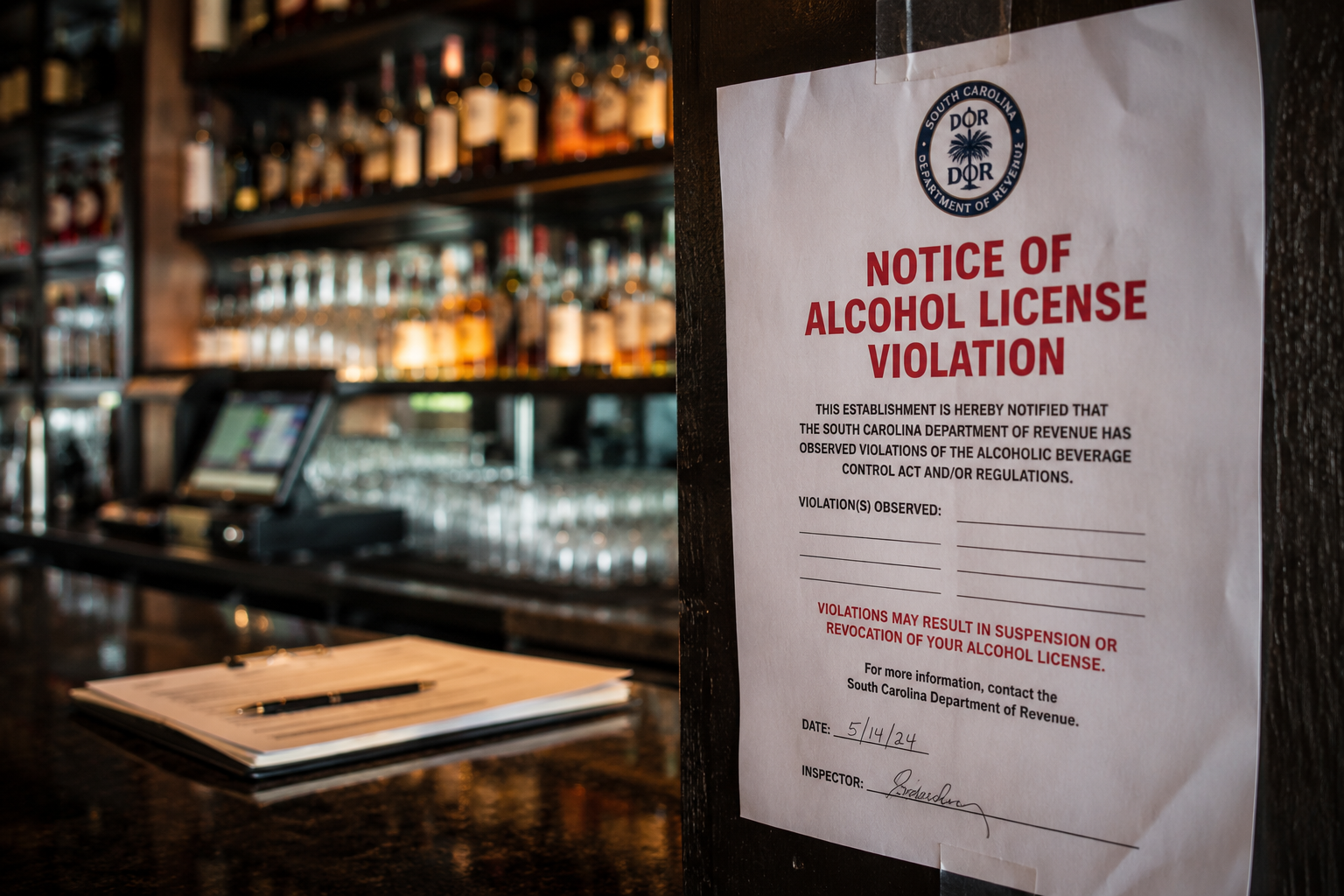
Many alcohol license violations do not begin with major misconduct. In fact, most South Carolina alcohol violations start with small compliance issues that business owners did not realize created risk in the first place. Restaurants, bars, breweries, convenience stores, liquor stores, and hospitality businesses often assume that once the alcohol license is approved, the hard part is over. Unfortunately, that is not always the case. Missed renewals, documentation gaps, operational changes, and misunderstandings about compliance requirements can quickly lead to violations, investigations, fines, or even suspension. Understanding the most common risks can help protect your business before small issues become expensive enforcement problems. 1. Expired or Missed License Renewals One of the most common alcohol license violations is failing to renew a license or permit on time. Some business owners assume renewals happen automatically. Others believe they have more time than they actually do. An expired license can create serious problems, including: Loss of legal authority to sell alcohol Regulatory penalties Operational interruptions Increased scrutiny from regulators Even a simple administrative oversight can create costly consequences. 2. Operating Outside Approved Hours Many businesses unintentionally violate license restrictions by serving alcohol outside permitted hours. This often happens because owners or staff misunderstand: Allowed service times Holiday restrictions Special event rules Local operational requirements What feels like a minor timing issue can still trigger enforcement. Regulators typically expect businesses to know and follow the exact conditions tied to their license. 3. Failure to Report Ownership Changes This is a major issue that many owners overlook. Ownership changes that seem minor may still need to be reported. Examples include: Adding investors Changing partners Selling ownership interests Restructuring the business entity Management control changes Many business owners assume internal changes are private business matters. In reality, some changes may directly affect licensing requirements. Failing to report these changes can create serious compliance exposure. 4. Poor Employee Training Employees often create risk without realizing it. Staff who are not properly trained may unintentionally violate compliance rules involving: Age verification Over-service issues ID checks Alcohol handling procedures Service restrictions Even strong ownership oversight can break down if frontline staff are poorly trained. Many violations happen because systems were never put in place. 5. Missing or Incomplete Documentation Documentation failures are another common source of South Carolina alcohol violations . Businesses often struggle with maintaining: Renewal records Insurance documents Operational paperwork Required notices Internal compliance records When documentation is incomplete, regulators may view the business as poorly managed or noncompliant. Good compliance systems reduce this risk significantly. 6. Operating Outside Approved Business Activities Some businesses gradually drift away from what their original license or permit allowed. This happens more often than owners realize. Examples may include: Expanding service models Hosting new types of events Changing operational layouts Adding alcohol offerings Altering customer consumption patterns Growth is not always the problem. Unreported operational changes are. What worked under one business model may not fit the current one. 7. Waiting Too Long After Receiving a Notice or Warning This is often the costliest mistake. When owners receive notice of a potential violation, agency concern, or investigation, many delay action because they hope the issue is minor or will resolve itself. That delay can make things worse. Early response often creates more options. Waiting can increase exposure to: Fines Suspension Revocation risk Operational disruption Revenue loss This is one of the biggest reasons business owners contact a liquor license violation attorney . How to Reduce Alcohol Compliance Risk The best way to avoid alcohol license violations is to think proactively, not reactively. Ask yourself: Are all licenses current? Have ownership changes been reported? Are employees properly trained? Has the business changed operationally? Are compliance systems documented? Small gaps often go unnoticed until regulators identify them. Final Thoughts on South Carolina Alcohol Violations Most South Carolina alcohol violations are preventable. They usually do not start with intentional misconduct. They start with overlooked details, missing systems, and small compliance gaps that slowly create bigger risks. The goal is not simply to avoid citations. The goal is to protect the license that supports your revenue, operations, employees, and long-term business stability. Because when it comes to alcohol compliance, small problems rarely stay small for long.
If you are wondering how to get an alcohol license in South Carolina , you are not alone. Many restaurant owners, bar operators, brewery founders, retailers, and hospitality businesses assume the licensing process is mostly paperwork. But in reality, obtaining a South Carolina liquor license often involves far more than simply filling out forms. Ownership disclosures, permit selection, location requirements, operational details, and agency review can all affect whether your application moves forward smoothly—or gets delayed, denied, or flagged for additional scrutiny. Understanding the alcohol license requirements in SC before applying can help you avoid expensive mistakes. Step 1: Determine Which Alcohol License or Permit You Need One of the first mistakes business owners make is applying for the wrong license. South Carolina offers different alcohol licenses and permits depending on your business type and operations. Common examples include licenses or permits for: Restaurants serving beer, wine, or liquor Bars and nightclubs Breweries and taprooms Convenience stores and grocery retailers Package stores and liquor stores Hospitality and event venues The license you need depends on factors such as: What alcohol you plan to sell Whether customers consume on-site or off-site Hours of operation Business structure and ownership Local zoning and location restrictions Choosing the wrong license can create unnecessary delays or require reapplication. Step 2: Understand South Carolina Alcohol License Requirements Before approval, regulators evaluate more than just your application form. Key alcohol license requirements in SC may include: Complete ownership disclosure Background and principal information Business entity documentation Lease or property ownership records Tax compliance Location and zoning review Required permits and filings This is where many business owners encounter unexpected problems. For example, ownership interests that seem minor may still require disclosure. Changes in business structure, investors, or management can also trigger additional review. Even incomplete or inconsistent documentation can slow the process. Step 3: Prepare for the Application Review Process After submission, your application typically goes through regulatory review. This process may involve questions about: Ownership structure Financing arrangements Operational plans Prior licensing history Property issues Compliance concerns Many owners underestimate how detailed this review can become. What looks like a “simple application” can quickly become complicated when regulators identify missing information or inconsistencies. That is why alcohol licensing is rarely just paperwork. It is a legal and regulatory process. Common Reasons Alcohol License Applications Get Delayed If you want to avoid delays when applying for a South Carolina liquor license , watch for these common issues: Incomplete Ownership Disclosures Failing to identify all required principals, investors, or ownership interests can trigger delays. Wrong License Selection Applying for the wrong permit often leads to rework and wasted time. Missing Documentation Incomplete forms, missing signatures, or outdated records can stall approval. Location Problems Zoning restrictions or property-related issues may create complications. Operational Changes During Review Changing ownership, operations, or business structure mid-process can create new requirements. These issues are often preventable with proper planning. How Long Does It Take to Get an Alcohol License in South Carolina? This is one of the most common questions business owners ask. The honest answer: it depends . Timeline varies based on: License type Application completeness Ownership complexity Regulatory review issues Agency workload Local requirements Simple applications may move relatively smoothly. More complex applications involving ownership changes, disclosures, or operational concerns often take longer. The biggest delays usually come from avoidable mistakes—not the agency itself. Why Working With an Attorney Can Help Business owners often try to save money by handling licensing alone, relying on online research, or asking other owners for advice. The problem is that every situation is different. Advice that worked for another business may not apply to yours. Working with an attorney who understands South Carolina alcohol regulation can help you: Identify hidden risks early Choose the correct license Avoid preventable delays Respond strategically to agency questions Improve application readiness Small mistakes during licensing can become expensive later. Final Thoughts on Getting an Alcohol License in South Carolina If you are trying to figure out how to get an alcohol license in South Carolina , remember this: The goal is not simply to file paperwork. The goal is to secure the right license with fewer delays, fewer surprises, and stronger protection for your business. Because when alcohol sales are tied directly to revenue and operations, licensing mistakes can become costly very quickly. Proper preparation can help you move forward with greater clarity and confidence.